In humid subtropical cities like Guangzhou, semi-outdoor arcades provide shade and airflow yet still suffer from slippery floors and façade deterioration caused by condensation. This project proposes a lightweight, reversible microclimatic intervention that treats humidity as a design parameter rather than a nuisance.
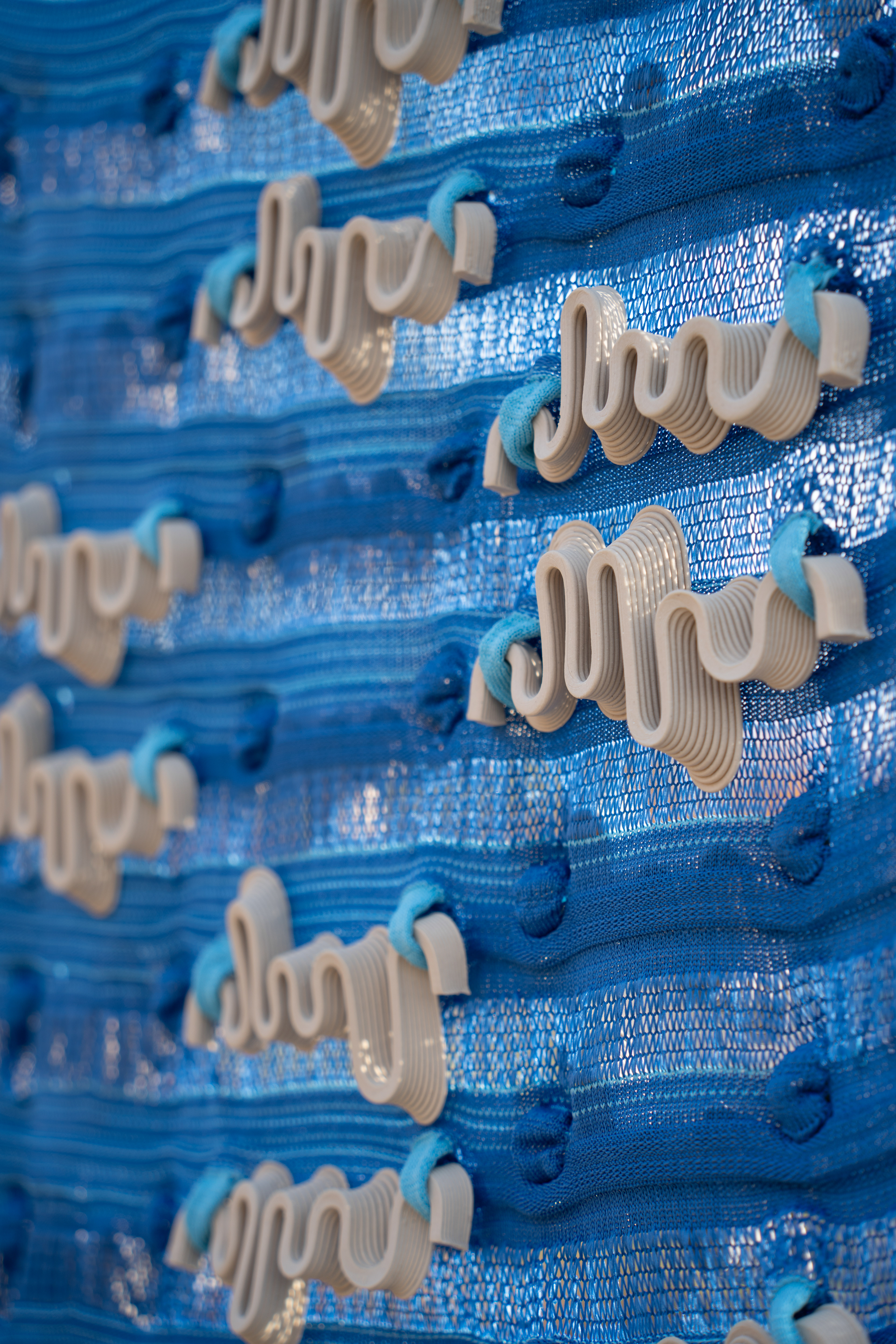
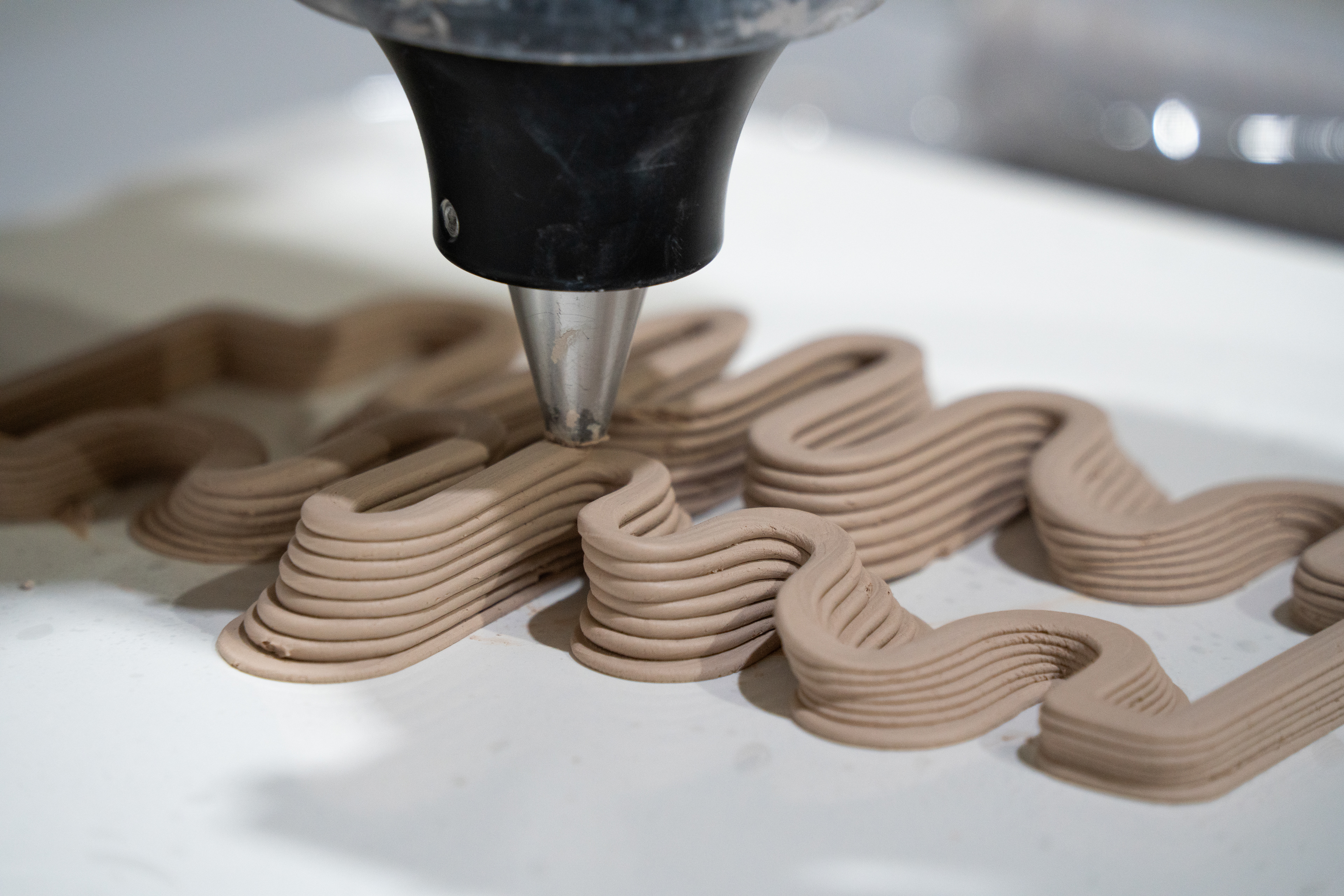
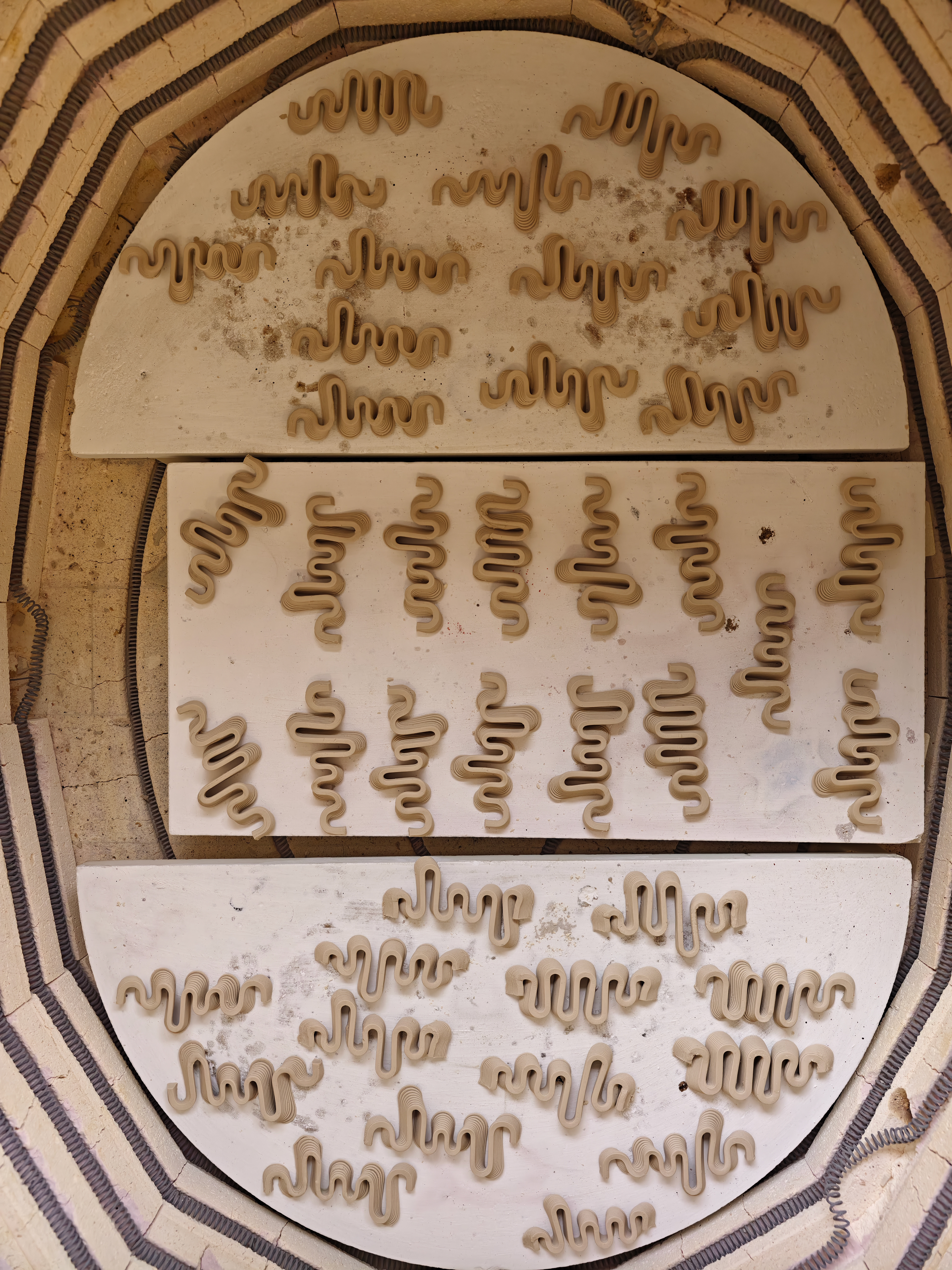
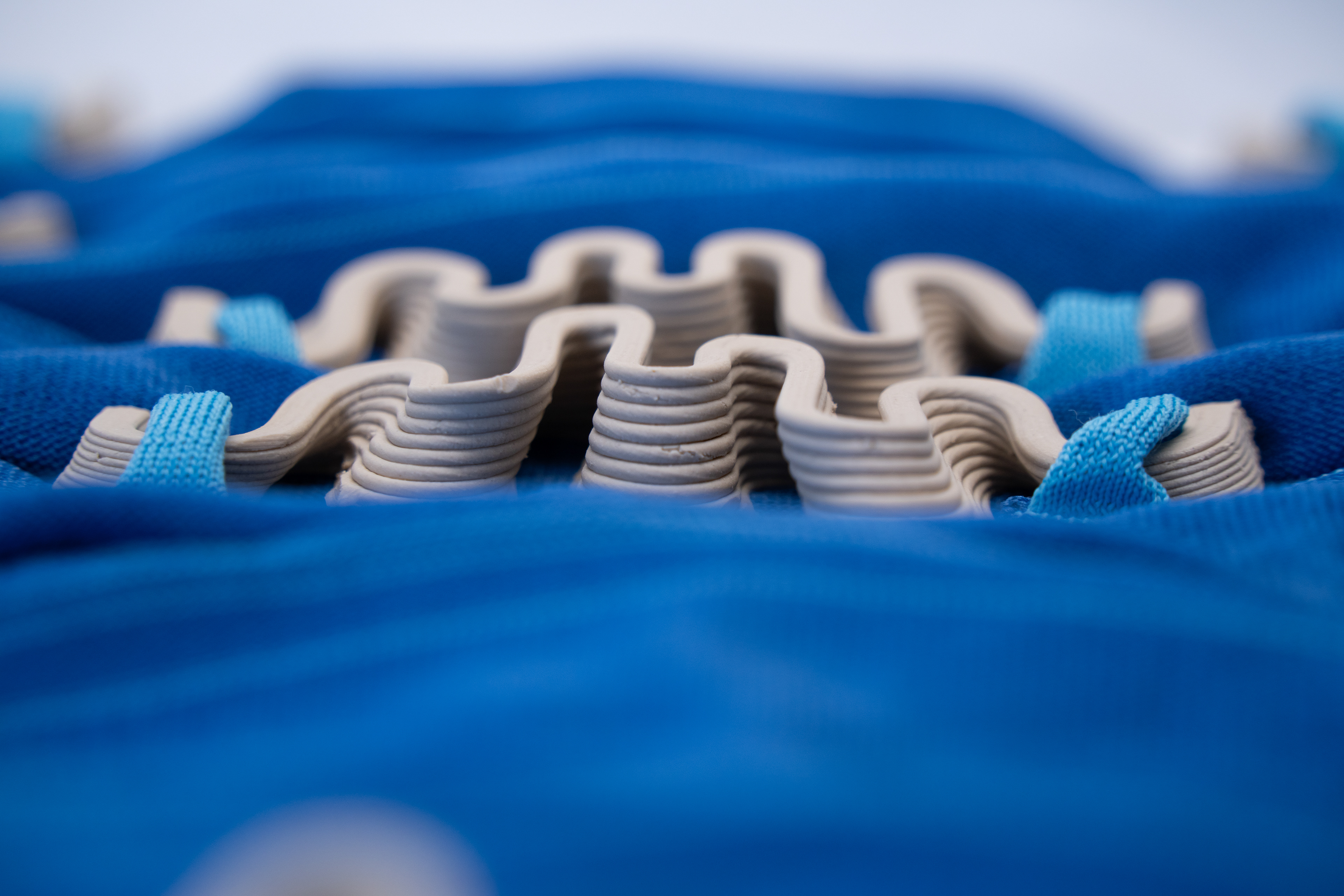
The system pairs 3D-printed porous ceramic modules with a CNC-knitted elastomeric textile matrix to form a suspended evaporative cooling panel. The ceramics act as moisture reservoirs, absorbing humidity and releasing it through evaporation to gently lower air temperature. The knitted textile works as a flexible structural framework: it holds the clay without adhesives or metal fasteners, tolerates shrinkage and warping, redistributes loads, and organizes how air flows around each module.
Environmental chamber tests showed measurable cooling, increased moisture buffering, and reduced ceiling condensation. Installed near the ceiling of historic arcades, these knit–clay panels could discreetly tune microclimate and mitigate moisture-related damage while preserving spatial openness and heritage character.
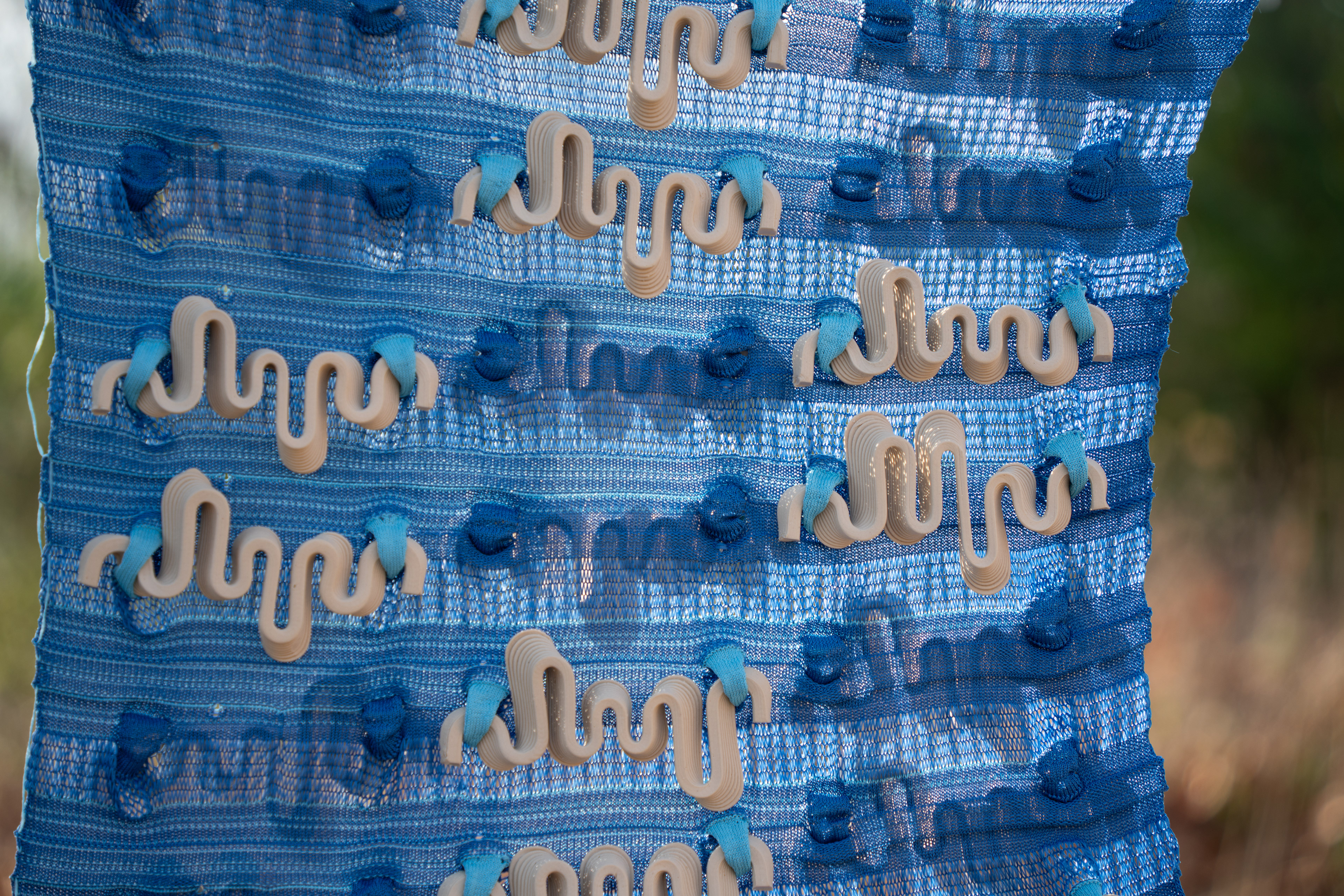
Chou, P., Yang, Q., 2026. Integrating Knitted Textiles with Clay 3D Printing for Climate Responsive Overhangs. (Submitted, under review for CAADRIA 2026)