Rising U.S. demand for critical minerals is pushing new domestic mining beyond federal lands and onto private and working lands, creating policy gaps around habitat protection, community impacts, and Tribal consultation. In partnership with the National Wildlife Federation (NWF), our Dow Sustainability Fellows team developed a Critical Minerals Tool Kit to benchmark U.S. policy against best practices and support responsible mining advocacy.
My role was to create an interactive StoryMap of eight critical minerals that filters national datasets and overlays private working lands to show where mineral potential concentrates and intersects with critical habitats and Tribal lands. The map identifies six hotspot regions as focal areas, enabling deeper zoom-ins that make local tensions clear and legible. Paired with case studies that illustrate how poorly planned projects can undermine wildlife habitat, water resources, and Indigenous rights, the StoryMap translates complex geospatial data into an intuitive narrative. Ultimately, it is designed to inform and shape decision-making by giving NWF and partners a clear tool to advocate for stronger environmental safeguards, meaningful Tribal consultation, and landscape-scale planning as the U.S. pursues an energy transition grounded in justice and ecological resilience.
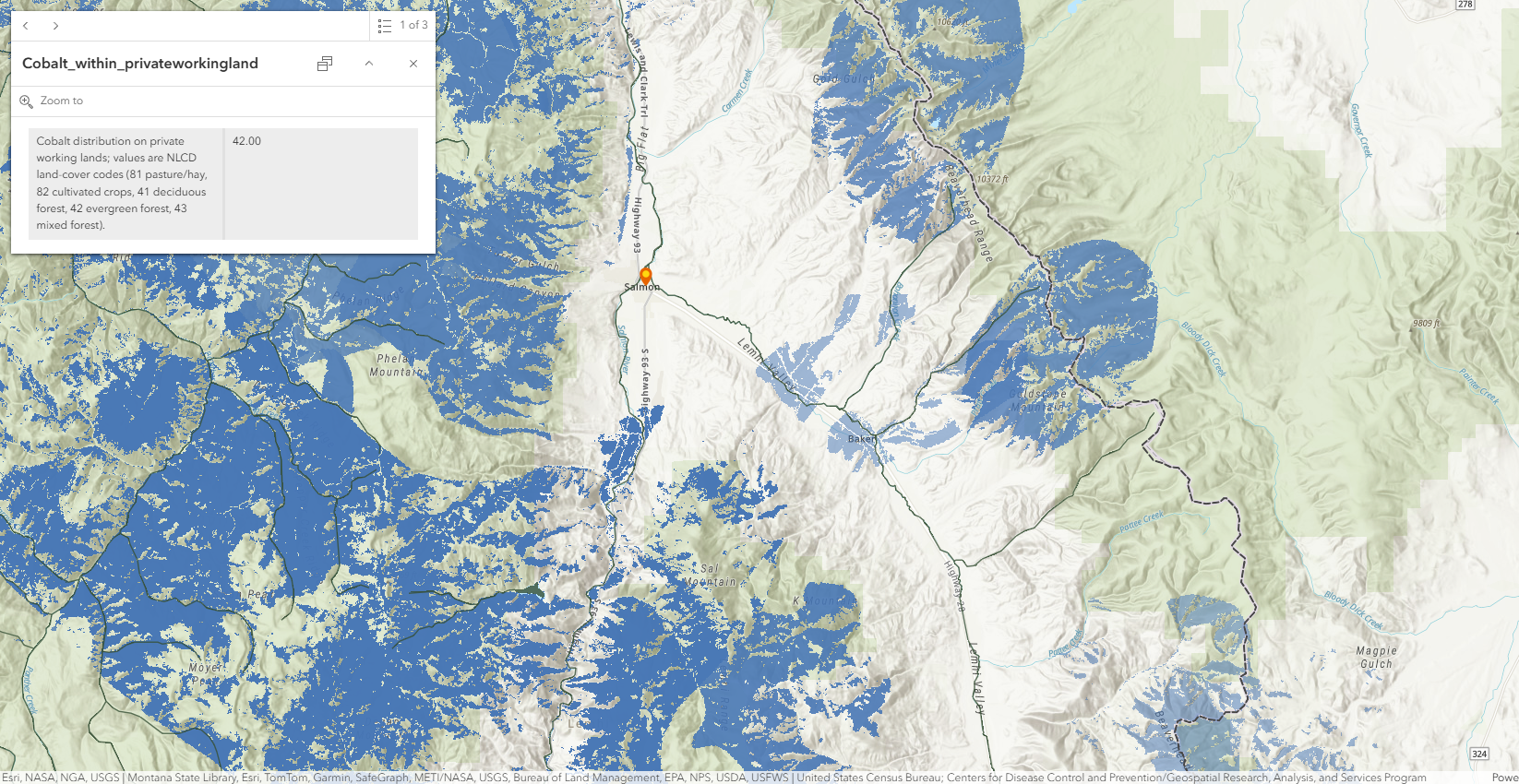
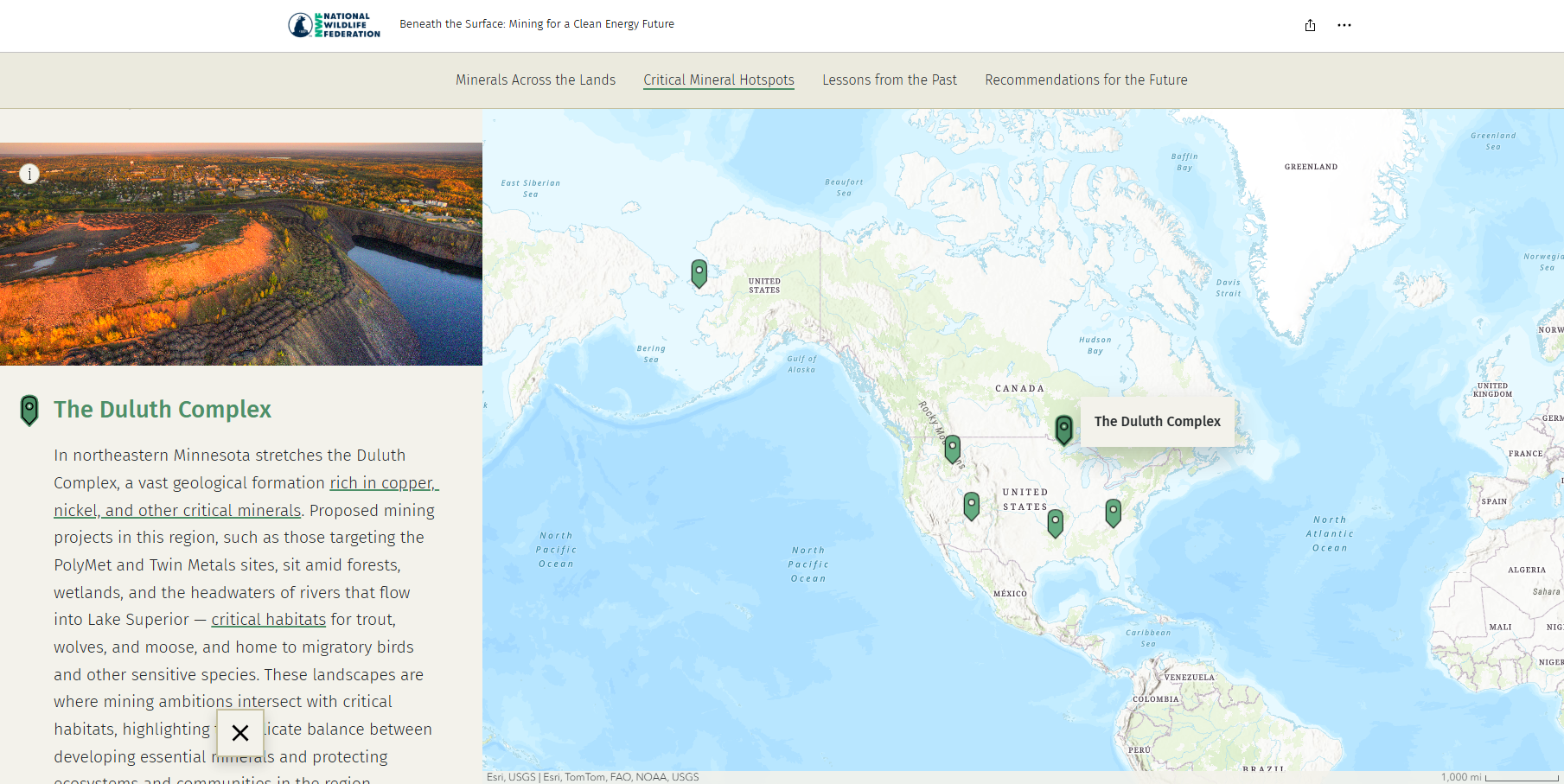
Data Source: MRLC, Earth MRI, US Domestic Sovereign Nations: Land Areas of Federally-Recognized Tribes (BIA), USFWS Threatened & Endangered Species Active Critical Habitat Report
Team: Libby Antonneau, Sarah Backstrand, Sabrina Lanker, Taylor Juleen and Qingru Yang
Project Partner: National Wildlife Federation